Pastoral Psychotherapy
Spiritual Direction & Relationship Counselling

Scottish psychiatrist Dr. R.D. Laing wrote: “Psychotherapy must remain an obstinate attempt of two people to arrive at a re-covery of the wholeness of being human through the relationship between them.” In pastoral psychotherapy, this becomes an intentionally three-way conversation between those two people and the welcomed presence of Jesus Christ through His Holy Spirit.
The art of the therapist is to create a truly safe and harmless space where deep relaxation, curiosity and honesty are supported by relating with skillful ease, candidness and genuine compassion. When this happens, the experience of our deeply shared humanness allows us to connect beyond our aching defences with the Source of eternal love and healing.
At its best, therapy can become an experience of communion, a conscious experience of the love and presence of God in and with us right in the midst of our very human struggles. Here, the patient, client or seeker is recognized as a unique person-to-be-welcomed, and not an object-to-be-tinkered-with. This sort of therapy is “sacred”, in the original sense of the word — it’s a protected space that we “set apart for a holy purpose” — to then gently look together at our real experiences of life and the people around us and what those experiences have meant to us. We can both sit back deeply and explore the terrain of feelings and thoughts and experiences together with no need to change anything in this moment. This stopping and resting in the truth of our experience is our invitation to Spirit to inhabit those experiences with us, and for us to notice the transformation that is already underway in us and between us.
“Attention, taken to its highest degree, is the same thing as prayer.”
Waters of life
For many people, spirituality — the things in our life that feel ultimately important — helps us frame how we see our world and our place in it. It’s like an underground river whose springs nourish the roots of our existence. Pastoral psychotherapy is a conscious search for these waters of life, and for how we might drink deeply and refresh ourselves.
Whether you relate to this ultimacy as the God of your religion, your higher power in a 12-step program, the nature of your mind, the divine mother, or something vital yet nebulous, the search comes with questions:
- What is the purpose of my life?
- Can I trust the Universe?
- Is Love real?
- What does it mean to be human?
- How do I live a life that reflects my deepest aspirations?
- How do I find peace?
- What brings me and others joy?
- How do I find heart-centred community?
- How do I connect with my higher power?
- How can I prepare for death?
Our relationship in therapy is still the core of what happens between us. As in all therapy, we attend to the pulse of what is vital between us: the thinking, feeling and doing that express themselves in our relationships. But here, our inner and outer landscapes expand to include a world that is unseen, yet deeply felt, and our work dances with our most intimate longings and wonderings.
Who comes to pastoral psychotherapy
Some people seek pastoral psychotherapy to find warm, skillful human connection and a consciously Christian approach to their life and its challenges. Others want to simply explore their life in reference to their own unique experience of faith, and have a wise companion who can support them and hold space for reflection. Still others come, not because they are Christian or even consciously spiritual, but because they are drawn to the grounded loving-kindness and experience of grace, non-judgment and non-shaming that forms this relational container for personal transformation.
Living human documents

Anton Boisen, the founder of Clinical Pastoral Education, wrote: “I have sought to begin not with the ready-made formulations contained in books but with the living human documents and with actual social conditions in all their complexity.” Pastoral psychotherapy honours our humanity and our actual lived experiences before it presumes to deliver spiritual prescriptions. Often the way forward is shown only as we walk the path together, trusting the wealth of wisdom available to us in scripture, the ever-presence of the Holy Spirit, and the everyday miracle of authentic, loving human relationship. Instead of prescriptions, in therapy we struggle with descriptions, knowing that when we can articulate our actual experience to a trusted other, when we can be precise and accurate, everything shifts, a veil lifts and understanding deepens.
Healing is one of many English words like whole, hale (and hearty), health and holy that developed from the Indo-European root word kailo. True healing and true holiness are both about allowing the whole of our experience to be integrated, to live without hiding parts of ourselves away as unlovable and unredeemable. To allow everything in us that needs a voice to be allowed to speak. To see and be seen. To allow God to love all parts of us without shame. To experience profound wellness in body, mind, spirit and relationships. God the Holy Spirit is God the Healthy Spirit.
Trauma
Our difficulties in living — our fears, depressions and anxieties — are personal, intimate and delicate. Very often they come to us by way of the deprivations and traumas we experienced in early life at the hands of others who had power over us. These hurts become compounded as we inevitably remake our view of ourselves and our way of being in the world to fit the warped picture that trauma has painted over us. Our emotional difficulties are not a sign of weakness. Often they are a sign that healing is already taking place deep in the psyche, allowing the pain of the past to resurface so it can be clearly seen and perhaps grieved, reconsidered and integrated. Because trauma is inflicted relationally, in the we-space we occupy with other people, it is also healed relationally. Our sufferings are not character failings. No one suffers who was not harmed in some way.
If you take medication or work with a physician or psychiatrist, that care can sit comfortably alongside our work together.
When faith itself has been a source of hurt
Many of us picture God, or our higher power, in a way that looks a lot like our parents. Many religions explicitly depict God as a father, and if you had a difficult relationship with your own father, this can muddy the waters.
Pastoral therapists are also in an ideal position to deal with trauma that is overtly spiritual in nature. Many people have been raised in such a way that their relationship with God and their sense of their own place in the world has been damaged by frightening religious views, human betrayal and hypocrisy, and distorted portrayals of the spiritual world. An overemphasis on personal sin, to the extent that it functionally denies the grace of God in one’s life, is common. An inability to rest in the saving and keeping power of Christ can be complicated both by our relationships with our early caregivers and by notions about holiness that are based on punishment and obligation rather than grace and love.
Because I have been trained in theology as well as psychotherapy, I can help people make fine distinctions for themselves between helpful and unhelpful expressions of faith, theology and doctrine. I can help you to feel into where your spiritual beliefs are supporting your health and well-being, and where they feel like they are creating problems for you.
Relationships
Our relationships with our intimate others are the matrix for our deepest joys and our most hideous heartbreak in life. Our deepest, most ingrained ways of relating to the world come directly from our formative experiences in our families of origin. When those experiences were deeply supportive and “true to the grain of our own wood”, we grew up able to feel secure, loved and loving. When our early environment was littered with uncertainty and betrayal, we might find our life repeating early difficult patterns in order to bring this pain to consciousness. When this can be clearly seen and shared in a relationship of warmth, caring and authenticity with a trusted person, we become able to grieve, heal and perhaps come to a level of mastery over the trauma that we suffered. Becoming aware of the forces and people and experiences that have formed us enables us to find again the true shape of our lives, and to create a new environment that deeply supports us and the new life that blossoms in us in Christ.
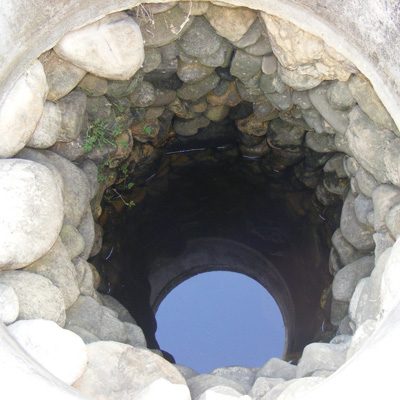
“Whoever drinks of the water that I will give him shall never thirst; but the water that I will give him will become in him a well of water springing up to eternal life.”
“You will know the truth, and the truth will set you free.”
Booking opens Jane, Rhonda’s secure booking system, in a new tab. Fees are on rhondaaltontracy.com.
Read about Rhonda’s own path — twenty years as a pastor, and as a chaplain and Christian counsellor.